I wanted to put together this blog post as there doesn’t seem to be a huge amount of information out on Horizon View Local Mode, on how to configure it and how you should expect to see it working.
I’m going to assume that you have built your Horizon View environment correctly, if you need some pointers, then I did a series of blog posts on the VCP5-DT exam objectives.
View Local Mode Best Practices
- The first thing we need to remember is that Persona Management does not work with Local Mode, why’s that you ask? Well if you think about it if I’m working offline how do I synchronize my ‘user data’ with a UNC path?
- It’s all about the ‘Persistent Disk’ this needs to be large enough to accommodate AppData/Contacts/Desktop/Documents/Downloads/Favorites/Links/Music/Pictures/Saved Games/Searches/Start Menu/Videos one of the key things is always the users Outlook OST file if this is 10GB in size you need to start with at least a 20GB Persistent Disk and expand as needed.
- When the user goes offline with the desktop, in my experience it is best for them to stay offline rather than check in and out as the time taken to do this can negate the all important end user experience. The downside to this, is that they can only access there desktop on the device which the desktop has been downloaded to. Consider giving them access to a ‘floating’ desktop as well for use with HTML5 access.
- Create a separate pool for Local Mode users as if you perform a recompose, they are going to have to download another full desktop over a WAN link, ouch!
- Consider turning off, Compress and De Duplication as this put’s more strain on the offline desktop host and also on the View Transfer Server. Yes you will get more data and bandwidth used, but happier end users as they see a performance impact on their desktop experience.
- Make sure that the initial ‘Check Out’ of the Local Mode desktop is done on a LAN environment.
- Depending on how many Local Mode Clients you have, stick to less than 20 per View Transfer Server.
- Only replicate Persistent Disks, your OS Disk should be considered disposable.
- Set a maximum time without server contact, I know this contrary to item 2. However, the user should have to login to the View Client on a regular basis to force server contact. As without this, you as a View Administrator have no control on what happens to their desktop.
- Check that your user laptops will support the hardware reqiurements to work in Local Mode
How Local Mode Replication Works
Let’s say your Target Replication Frequency is once per day for ease.
- On Monday your replication completes.
- On Tuesday your replication starts but you go offline.
- On Wednesday, Tuesday replication will continue until it completes and then Wednesday replication will start.
What To Expect In Horizon View Administrator/vCenter
When I first started using Local Mode, I couldn’t really find any information on what to expect, so below is the chain of events that I consider takes place.
Note, this is all my own research that has not been ratified by VMware.
Term Clarification
‘Online’ Local Mode Desktop is the VM held on vCenter
‘Offline’ Local Mode Desktop is the VM held on the users laptop
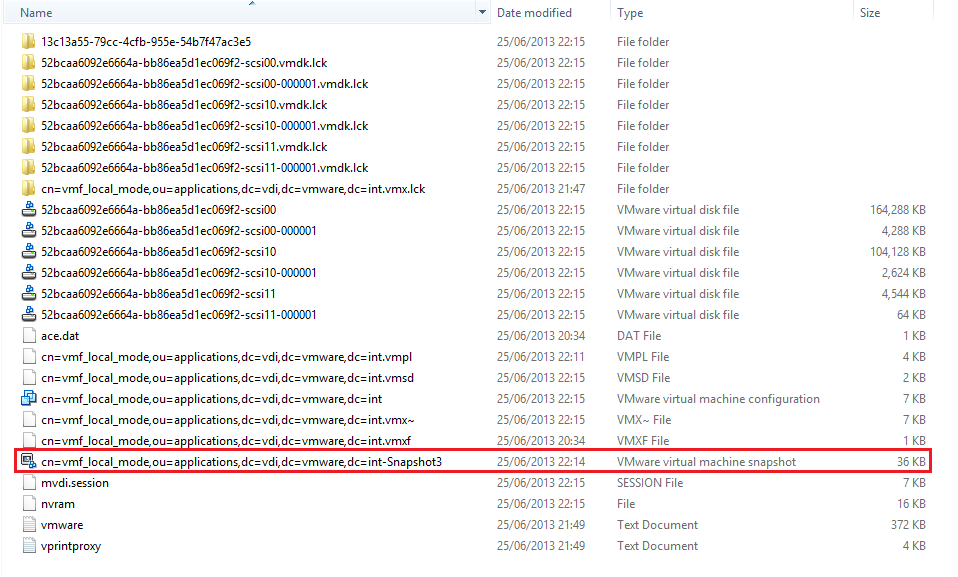
If you monitor the location of your ‘Offline’ Local Mode Desktop, the default location is C:UsersUser NameAppDataLocalVMwareVDMLocal Desktops you will notice a Virtual Machine Snapshot File
This is the last known good snapshot which has taken place, which has been committed to the ‘Online’ Local Mode Desktop

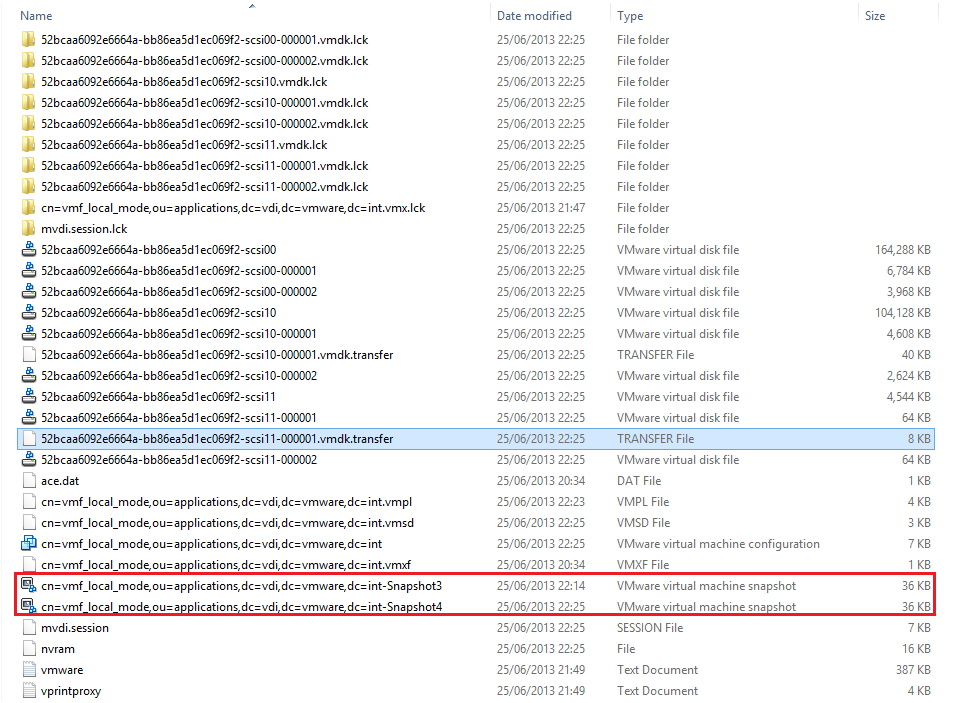
At the next Target Replication Frequency interval, another snapshot is taken, in this case we have Snapshot3 and Snapshot4 in situ.

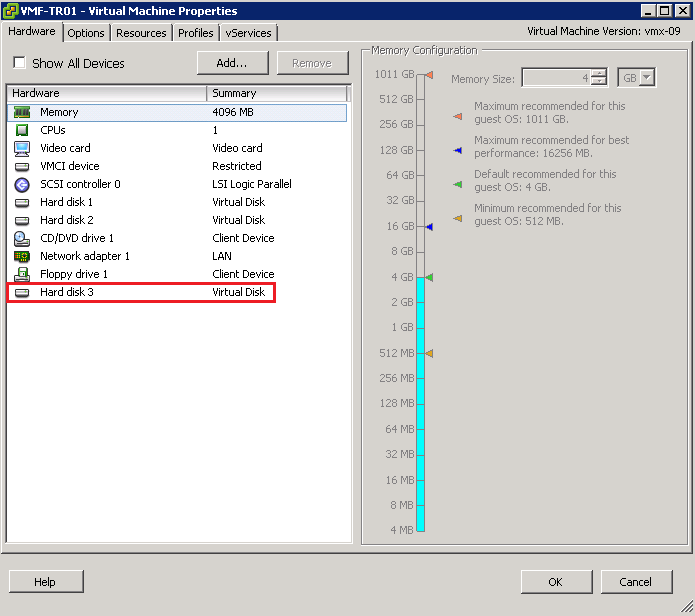
The snapshot delta is uploaded to the View Transfer Server which ‘adds’ the snapshot Virtual Disk from the ‘Offline’ Local Mode Desktop to itself

You will see this Recent Task appear in vCenter

View Transfer Server then processes the changes from the last delta and releases the Virtual Disk and goes back into it’s normal state.

An acknowledgement is sent from the View Transfer Server to the ‘Offline’ Local Mode Desktop releases the oldest snapshot as this has been committed to the View Transfer Server and you are left with the last known good snapshot. In this case it would be snapshot4.
Next your ‘Online’ Local Mode Desktop in my case VMF-LM01 creates a snapshot from the View Transfer Server process to commit the changes to the ‘Online’ Local Mode Dekstop (VMF-LM01)

This can be verified by checking the Snapshot Manager for VMF-LM01.
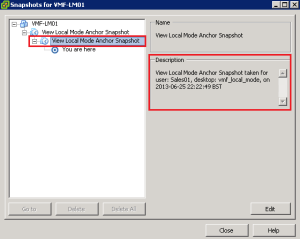
This snapshot is then committed and removed to ensure that both the ‘Offline’ and ‘Online’ Local Mode Desktops VMF-LM01 are kept in sync.

For those of you paying attention, some of the timelines aren’t 100% in synch, this is due to my inability to keep up with the transfer process. However the chain of events are correct!
If anyone is able to add anymore information to this post, it will be welcomed.









 VMFocus