vCenter 5.1 Upgrade

I have been meaning to perform a vCenter 5.1 upgrade for some time now.  The good news is, I have a few space minutes to get the vmFocus lab upgraded.

First of all, you need to decide on how you are going to upgrade, are you going to perform:

In Place Upgrade this is where you install straight over the existing vCenter, this is supported for 64 bit systems on vCenter 4.0 and 5.0

New Install   this is where you install a new vCenter 5.1 server and then add you hosts to it.

I’m going to go for a new install, as my existing vCenter 5.0 server has taken some battering, with SRM being added on and taken off numerous times.

vCenter 5.1 has much higher resource requirements, so it might be worth a quick flirt past the Upgrading to vCenter Server 5.1 Best Practices KB to make sure your environment is up to scratch.

One thing that is worth mentioned is your DNS entries, I suggest you make sure these are spot on.  In my environment I have a Windows Server 2008 Active Directory Integrated Forward Lookup and Reverse Lookup Zone for vmfocus.local

I have DNS records for the following entries, both forward and reverse:

  • ESXi01 192.168.37.1
  • ESXi02 192.168.37.2
  • ESXi03 192.168.37.3
  • VMF-APP01 192.168.37.205

You probably guessed that ESXi01, ESXi02 and ESXi03 are all vSphere Hosts and VMF-APP01 is a Windows 2008 R2 Standard Server.  Before this upgrade all of the vSphere Hosts are attached to another vCenter called VMF-ADMIN01.

What I really like about vCenter is you can install another instance and then just attach the hosts to the new vCenter.  You do loose historical performance data, but if you have a baseline already, that’s not such a big issue.

OK then let’s crack on.

TOP TIP: Don’t forget to install Adobe Flash Player

Installation

Fire up the installation media, if you haven’t downloaded it already, it can be obtained from here

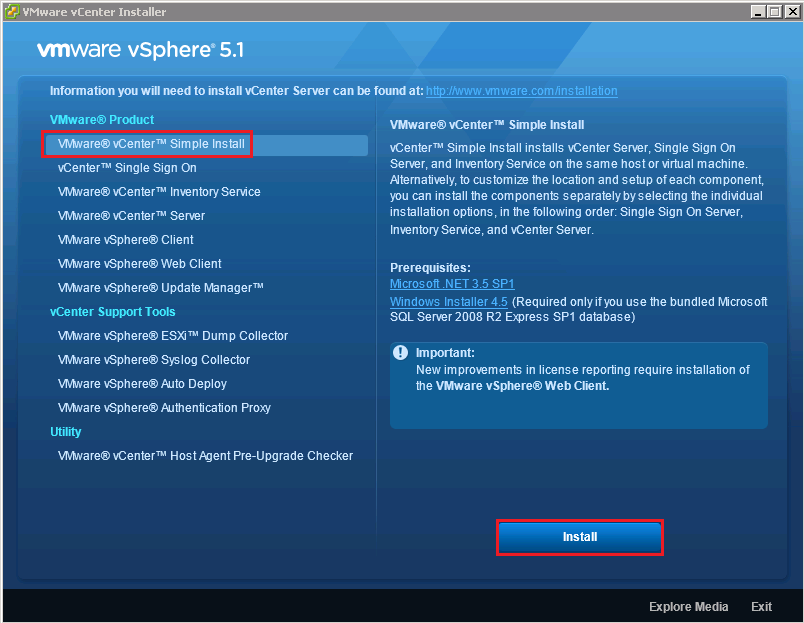
Select VMware vCenter Simple Install and then Click Install
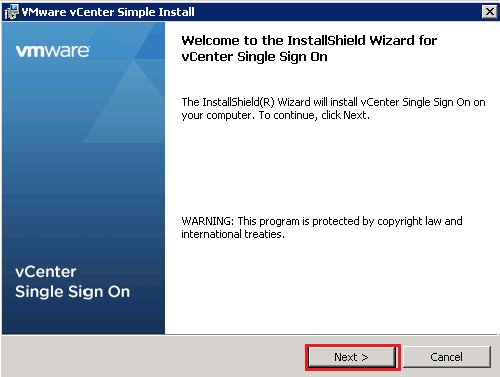
The installation will install vCenter Single Sign On first, so click Next to this
I’m not going to insult your intelligence, Hit Next again, and Accept the terms of the license

This is where things start to get interesting, we need to give a password to the account admin@System-Domain which is used to administer the Single Sign On service.

In this instance, I’m going to opt for a Microsoft SQL Server 2008 R2 Express installation

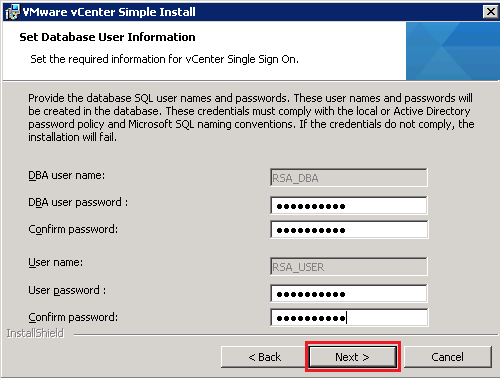
Cool, something new! The vCenter 5.1 installation is going to create two users RSA_DBA and RSA_USER in the SQL database, pop a password in that complies with your policies.
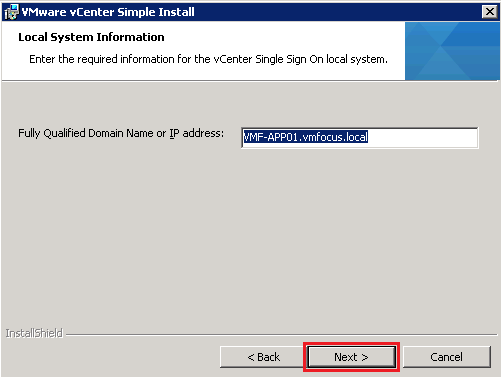
This part is proper important, make sure that you verify your FQDN of your vCenter Server and give it a ping for good measure.
For Security reasons, I always specify an account for vCenter services to run under, you don’t have to do this, but if you want to tick the ‘best practices’ box it’s best too.

We can now change the default install path, I recommend you don’t change this, unless you have a compelling reason to do so.

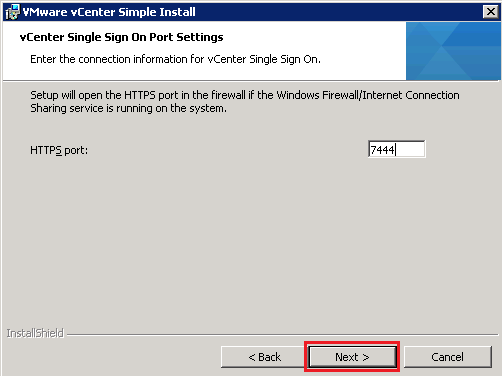
We can also change the port used for the Single Sign, I’m happy with the defaults on mine.
Not sure why, but it does seem like an age since we began the installation.  Finally, we can click Install.

Probably a good idea to make yourself a tea or coffee as this is going to take a while.

Once Single Sign On has installed, you will see the Inventory Service, install and then finally vCenter itself.

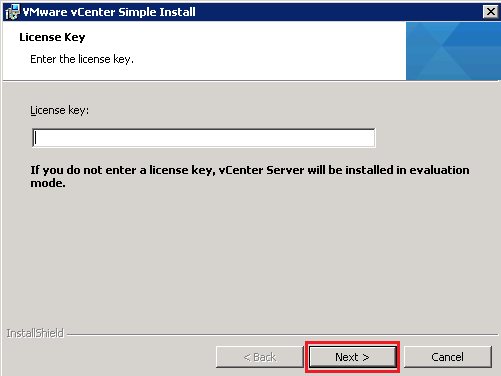
We need to perform a little bit of interaction with the vCenter install, the first question is a License Key, if you don’t have one, click Next and you can use the free trial version.
We now get the choice of using Microsoft SQL Server 2008 Express or another database.  I’m going to roll with SQL Server 2008 Express (partly because I’m cheap)

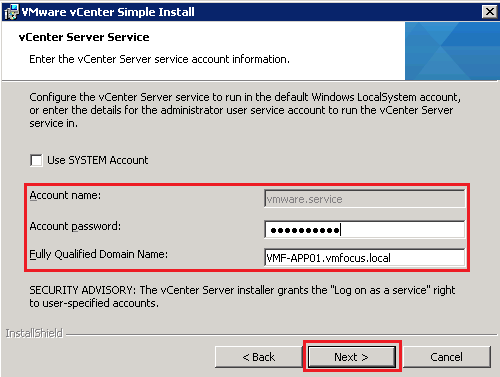
Again, we have another question on the System Account, I’m going to use my VMware.Service account for this
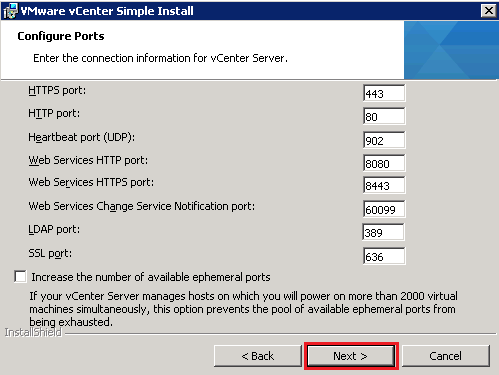
Ports, we can change the default ports used by all of vCenter’s services.  I’m going to leave mine at default.
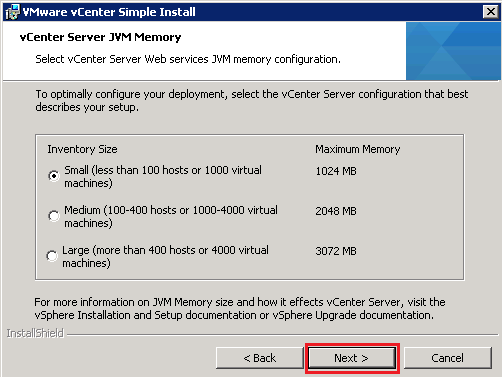
Time to select your deployment size, unless you have a super lab, then I’m sure you and I will be OK with Small
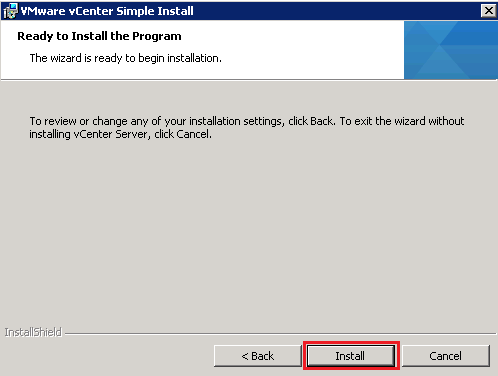
Then finally, click on Install.  Don’t be alarmed if after you click Install, the installer package disappears for a few seconds, this is quite normal (yes it did freak me out).
Boom, job done!

Web Client

Probably be a good idea to install the web client as well, so from our vCenter Installer, select VMware vSphere Client and hit Install

Choose your language, (still no United Kingdom version for English)

Don’t be alarmed everything will disappear for a while.  Once the install is back click on Next

Hit Next, and then agree to the terms of the license and Hit Next again.

You can change the default install folder if you like, however as always I recommend leaving it as default unless you have a valid reason not too.
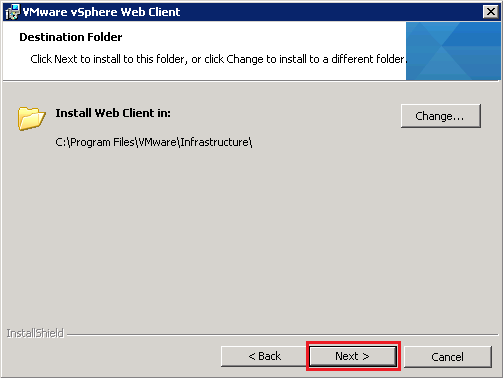
We can not change the vSphere Web Client Ports, I’m going to leave mine at the default HTTP 9090 and HTTPS 9443

This is where thing start to get interesting, we need to specify the vCenter Single Sign On administrator password which we entered during the Single Sign On installation.

Hopefully, you should now be at the Install screen, hit Install

Happy days, we are all done, well nearly!
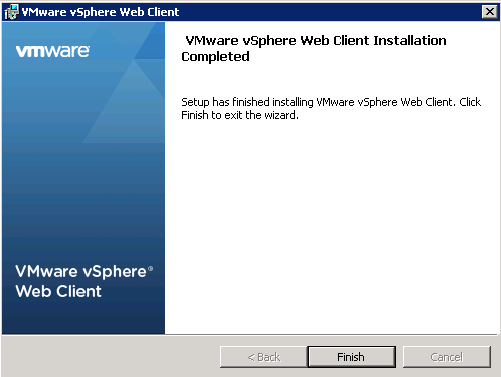
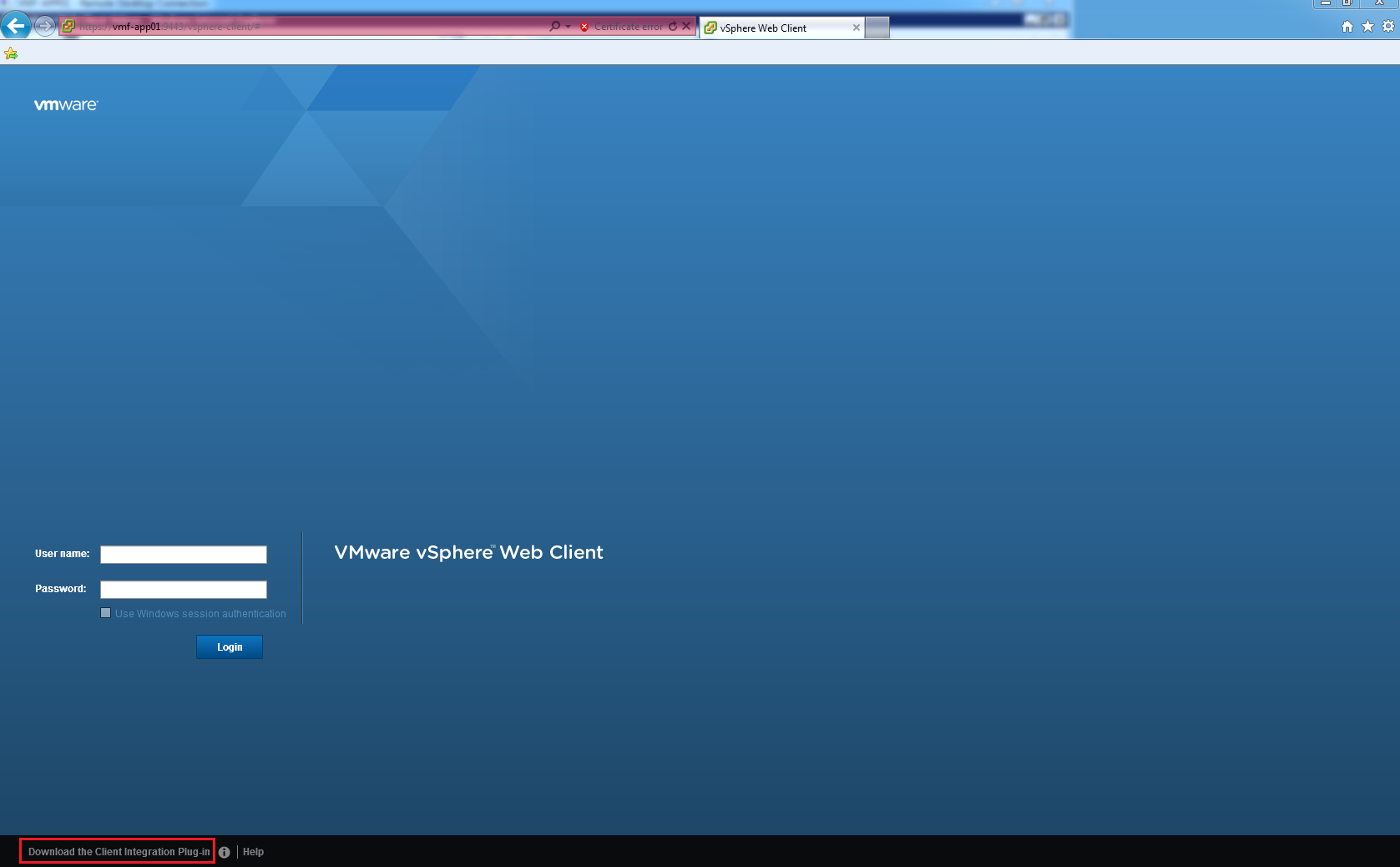
Cool, we can now launch either the vSphere Web Client from Start > Program Files or we can browse to https:\vcentername:9443

At the login screen, we want to ‘Download the Client Integration Plug-in’
Run the file VMware-ClientIntegrationPlugin-5.1.0.exe
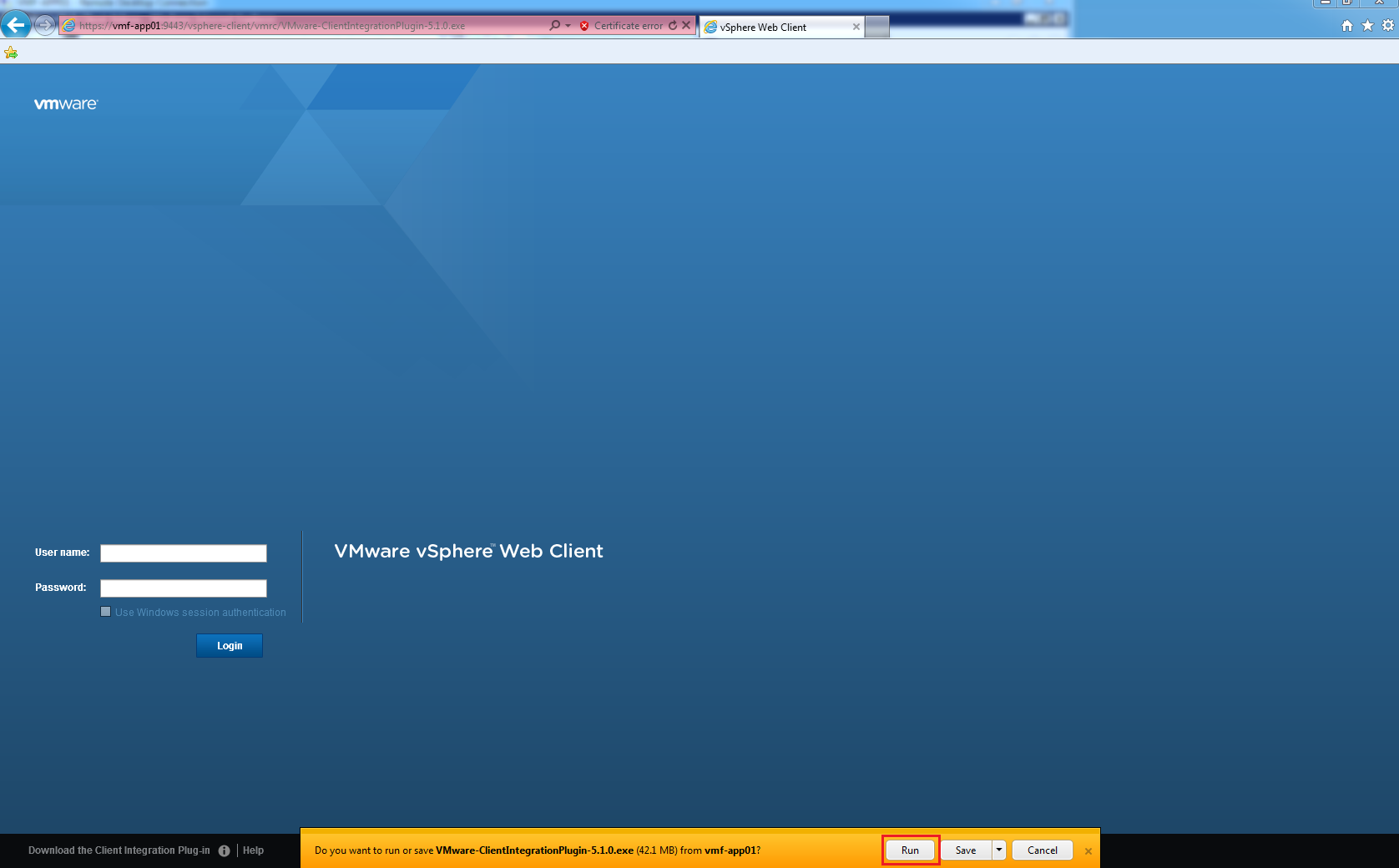
At this point, you will need to close your web browser otherwise you can’t install the plug in!

Cool, click on Next and let the magic happen
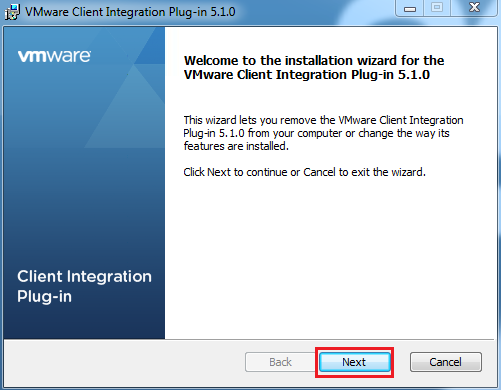
All installed click on Finish

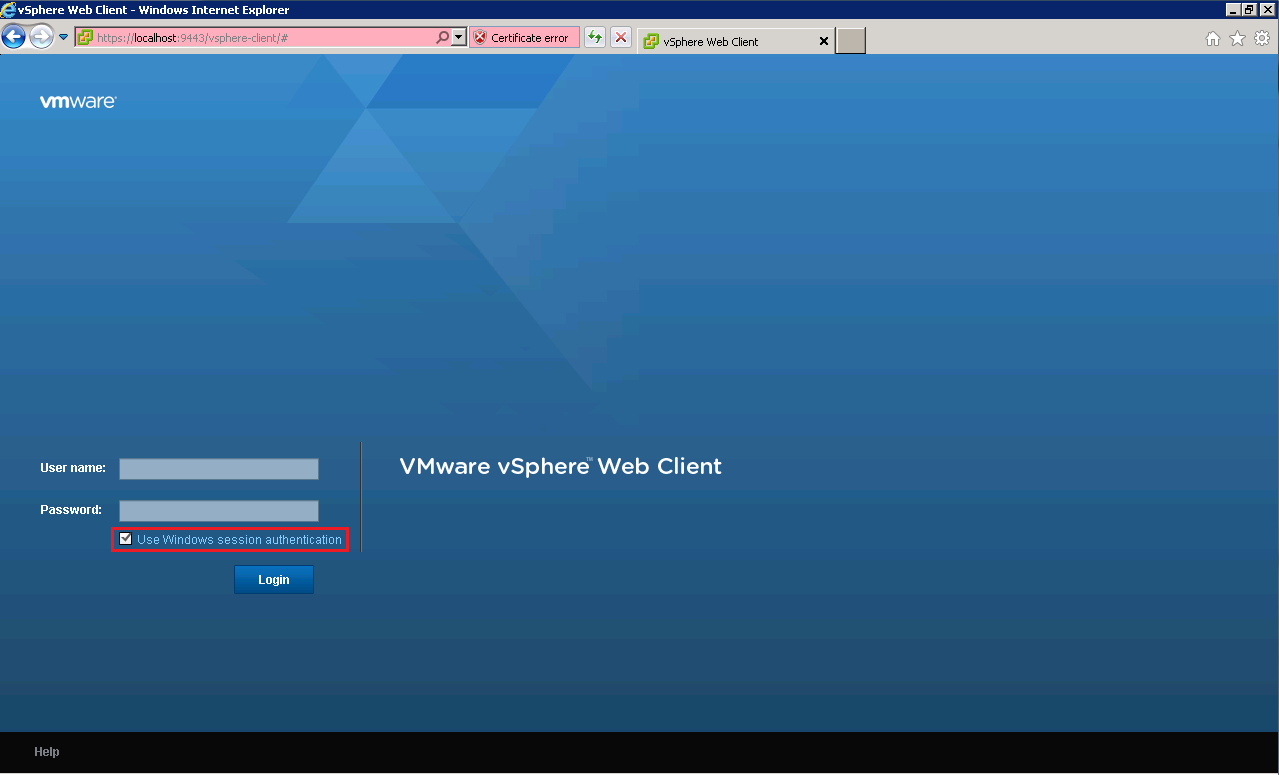
Let’s give it a whirl, browse to https://localhost:9443 and place a tick in ‘Use Windows Session Authentication’
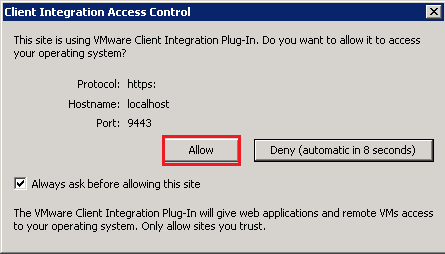
You should get an Client Integration Access Control which is confirming you are allowed access, click Allow
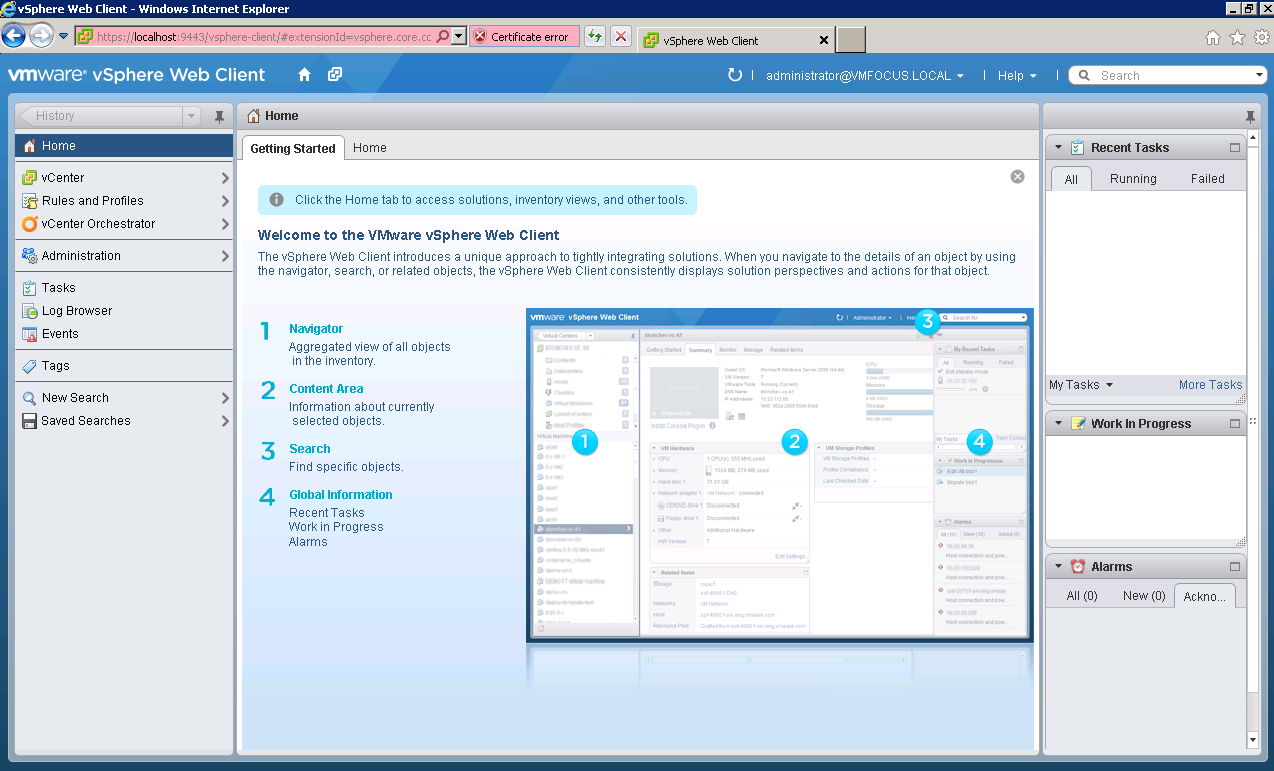
Voila we are in! Now time to familiarise myself with the new GUI
VMware Hands on Labs Online

A really quick blog post, VMware have announced some exciting news, that they will soon be offering Labs Online.

Previously to use these labs you had to attend a VMware event of some description, but now they will be available online.

The purpose behind this is to give end users the ability to use and explore the latest VMware products.

For more information see VMware Hands on Labs Online – Beta

vSphere 5.1 – My Take On What’s New/Key Features

With the release of vSphere 5.1, it’s been tough keeping up with all the tweets and information from VMworld 2012 San Francisco.

With the plethora of data, I thought it would be handy to blog about what the key features that will have the biggest impact on my every day life.

Licensing

vRAM – It’s gone, licensing is back to per physical processor.

vSphere Essentials Plus – Now includes vSphere Storage Appliance and vSphere Replication.

vSphere Standard  – Now includes vSphere Storage Appliance, vSphere Replication, Fault Tolerance, Storage vMotion and vCentre Operations Manager Advanced.

Beneath The Hood

Monster Virtual Machines

Virtual Machines, can now have the following hardware features:

1TB RAM
64 vCPUs
> 1 Million IOPS per VM

Wonder if I will continue to have those we need a physical SQL server conversation?

This is made possible by Virtual Machine Format 9.

vMotion

vMotion no longer requires shared storage.  This has been achieved by combining vMotion and Storage vMotion into a single operation.  So when a VM is moved, it moves the memory, processing threads and disk over the network to it’s target.

Now what is really, cool it maintains the same performance levels as the older vMotion with shared storage!

Note, I recommend that you use multiple NIC’s for vMotion as per my post High Availability for vMotion

vSphere Replication

Enables virtual machine data to be replicated over LAN and WAN.  Previously to achieve 15 minutes  a-synchronous replication you need sub 2 ms latency.

vSphere Replication integrates with Microsoft’s Volume Shadow Copy (VSS) ensuring that applications such as Exchange and SQL will be in a consistent state if DR was implemented.

vSphere Replication can be used for up to 500 virtual machines.

The initial seed can be done offline and taken to the destination to save bandwidth and time.

VMware Tools

No more downtime to upgrade VMware Tools.

vSphere Web Client

This is going to be the tool for administrating vCentre.  Some pretty cool features like vCenter Inventory Tagging, which means you can apply meta data to items and then such on them e.g. group applications together for a particular department or vendor.

We now have the ability to customise the web client to give it ‘our look and feel’.

Always getting called away when you are half way through adding a vNIC to a VM, well we can now pause this and it appears in ‘work in progress’ so we never forgot to complete an action.

For the pub quiz fans, you can have 300 concurrent Web Client users.

Link Aggregation Control Protocol Support

Used to ‘bind’ several physical connections together for increased bandwidth and link failure (think Cisco Port Channel Groups), this is now a supported feature in vSphere 5.

Memory Overhead Reduction

Every task undertaken by vSphere has an overhead, whether this is a vCPU or a vNIC, it requires some attached memory.  A new feature allows upto 1GB of memory back from a vSphere host which is under pressure.

Latency Sensitivity Setting

vSphere 5.1 makes it easier to support low latency applications (something which I have encountered with Microsoft Dynamics AX).  The ability to ‘tweek’ latency for an individual VM is great.

Storage

We now have 16Gb Fiber Channel support and iSCSI Storage Driver has been upgraded. Some very impressive increases in performance.

Thin provisioning has always been an issue unless your array supported T10 UNMAP.  With vSphere 5.1 a new virtual disk has been introduced the ‘sparse virtual disk’ AKA SE spare disk.  It’s major function is to reclaim previously used space in the guest OS.  This feature alone is worth the upgrade.

Setting Up & Configuring Alarms in vCenter 5 Part 2

In the previous post setting up and configuring alarms in vCenter 5 Part 1 we looked at the initial configuration.  We are now going to run through some of the default alarms, with some suggested thresholds.

Cannot Connect To Storage why would we want to configure this? Well essentially this is a per host setting.  If the host loses connection to the storage then the VM’s will be restarted using HA.  Big deal you say, I can see that in vCentre.  Well it also manages ‘lost storage path redundancy’ and ‘degraded storage path redundancy’ so if you have an if your ESXi host has multiple connections to it’s storage, you will be notified if one of these is lost.

Datastore Usage On Disk quite an important one.  From the presented LUN how much space has been provisioned as a Datastore.  I recommend always asking for slightly more than need e.g. if you need 1TB for a Datastore, ask for an extra 25%.  Then when the Datastore is provisioned only use 1TB so you have room for expansion quickly and easily if needed.  With this in mind, I set the Warning to 90% and Critical to 95% so I have some room to either more VM’s around either by Storage vMotion or Cold Migration.

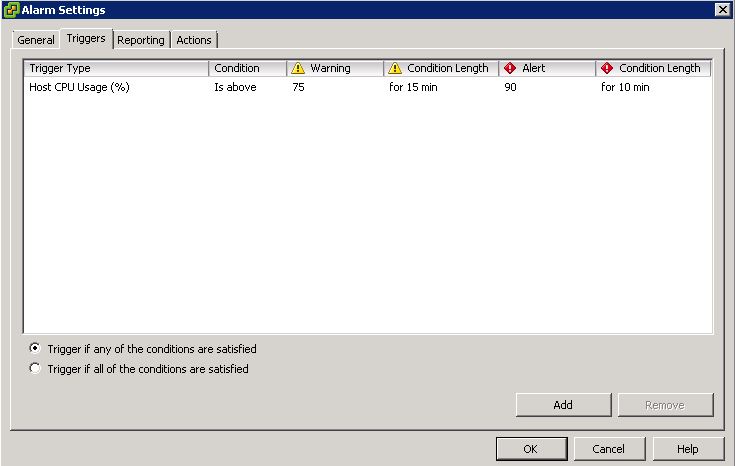
Host CPU Usage with this alarm, I generally alert at Warning 75% for 15 mins and then Critical for 10 mins.  The rational behind this is that I would want to investigate the VM’s CPU utilisation to see if it is a one off event causing the high usage or if we need to look at introducing more processing power into the cluster.

Host Error perhaps the most important one, this is what vCentre relies on to monitor host alarms!

Host Memory Usage similar to CPU usage, I generally set Warning to 90% for 15 mins and Critical for 10 mins.  Again I would want to investigate the host memory usage to ensure that we have sufficient resources for a host failure.

Host Memory Status not be confused with ‘Host Memory Usage’ this monitors the physical DIMMS.

Host Process Status again not to be confused with ‘Hot CPU Usage’ this monitor the physical processor hardware.

License Capacity Monitor I like this alarm, it’s great for items such as Site Recovery Manager or Operations Manager.  It lets you know if you are trying to protect or manage more VM’s than you are licensed for.

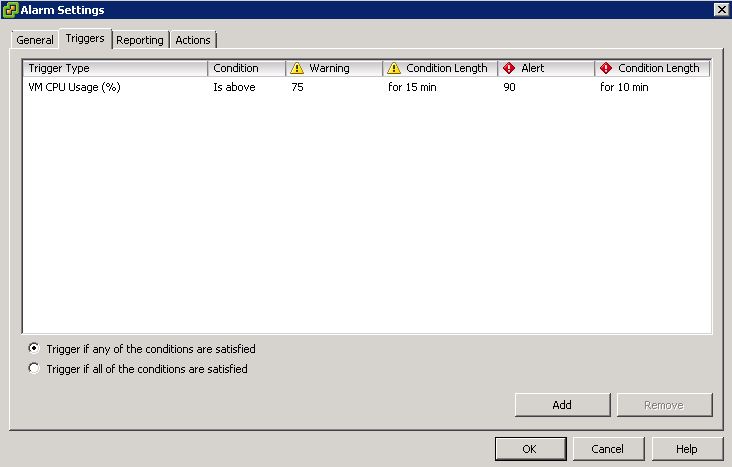
Virtual Machine CPU Usage I use the same alarms settings for ‘Host CPU Usage’ so that if a VM is using more than 75% of it’s CPU capacity for over 15 minutes, I would want to identify if this is a one off or if extra resources are required.

vSphere HA Failover In Progress this resides on the nice to have.  If for some reason none of your other alarms work then at least you know that a VM has been restarted by HA.

vSphere HA Virtual Machine Monitoring Error this alarm works in conjunction with Virtual Machine Monitoring.  I tend to leave VM Monitoring Only and Medium and then change individual VM’s monitoring to High if required.  If you have this set to high for all servers then it can cause alarms when backup software rolls back snapshots depending on how big the VM is.

Hopefully these alarms shouldn’t need any explanation, as they should ALWAYS be enabled.

Host Battery Status
Host Connection And Power State
Host Connection Failure
Host Hardware Fan Status
Host Hardware Power Status
Host Hardware System Board Status
Host Hardware Temperature Status
Insufficient vSphere HA Failover Resources
Network Connectivity Lost
Network Uplink Redundancy Degraded
Network Uplink Redundancy Lost

Naturally, this isn’t a complete list of alarms, however it is the default alarms that I would configure in most, if not all environments.  Every environment is different and you may use more or less alarms than I have mentioned.

Don’t forget that depending on which vSphere licenses you have might see extra default alarms for items such as FT.  Also when you install additional components e.g. SRM you will get even more alarms to have a play around with.